
A broken pipe or structural roof failure introduces large volumes of moisture into your property. Homeowners often assume the danger passes once the visual pooling stops, but hidden moisture continues to destroy drywall, rot framing, and trigger mold outbreaks behind finished surfaces. Complete remediation requires deep structural drying, professional moisture extraction, and targeted chemical treatments to stop biological growth from ruining your property a second time.
Why Does Secondary Destruction Occur After Visual Water Is Gone?
Secondary destruction happens because porous building materials absorb water deeply, trapping moisture inside enclosed wall cavities and subfloors. Even if your carpets look dry, the plywood underneath can remain completely saturated. This trapped dampness creates an ideal breeding ground for microscopic organisms.
According to environmental health studies, mold spores can activate and start colonizing within 24 to 48 hours of initial exposure to moisture. When indoor relative humidity climbs above 60%, air conditioning ducts, baseboards, and structural beams absorb that airborne vapor. This process warps hardwood planks, causes ceiling panels to sag, and ruins nearby paint long after you fix the plumbing problem.
How Do You Track Hidden Moisture Formations Safely?
Tracking hidden moisture requires specialized diagnostic equipment rather than visual inspections alone. Professional technicians utilize three primary pieces of technology to find water hidden deep inside your walls:
- Infrared Thermal Cameras: These tools detect temperature differentials across walls and ceilings, highlighting hidden cold spots where evaporative cooling signals trapped pockets of water.
- Pinless Moisture Meters: These devices use electromagnetic waves to measure the relative moisture content of drywall, plaster, and concrete without puncturing the finished surface.
- Meters with Pins: Technicians push sharp metal probes directly into wood framing, structural subfloors, and insulation materials to calculate the exact percentage of water saturation deep inside the structural framework.
Relying on physical touch to check for dryness often backfires. Drywall can feel completely dry to your bare hand while the insulation hidden behind it remains completely soaked. If you close up a wall section while that internal insulation is wet, structural rot will develop inside your home.
Why Is Industrial Dehumidification Necessary for Structural Frames?
Industrial dehumidifiers are necessary because fast-moving air units alone will merely shift moisture from wet walls straight into the surrounding indoor atmosphere. If that airborne moisture remains trapped inside the room, your relative humidity will spike, causing secondary condensation to form on cool surfaces like window frames and metal fixtures.
High-capacity refrigerant dehumidifiers pull that wet air across internal cooling coils, condensation drops form, and the machine pumps the collected liquid out of the property through a drainage hose. Desiccant dehumidifiers utilize specialized chemical drying agents to extract moisture from the air, making them ideal for deep structural drying in colder temperatures or on dense materials like concrete slabs and brick walls. Keeping indoor relative humidity below 50% helps shield your home against ongoing wood rot and secondary mold damage.
What Steps Stop Secondary Mold Outbreaks Immediately?
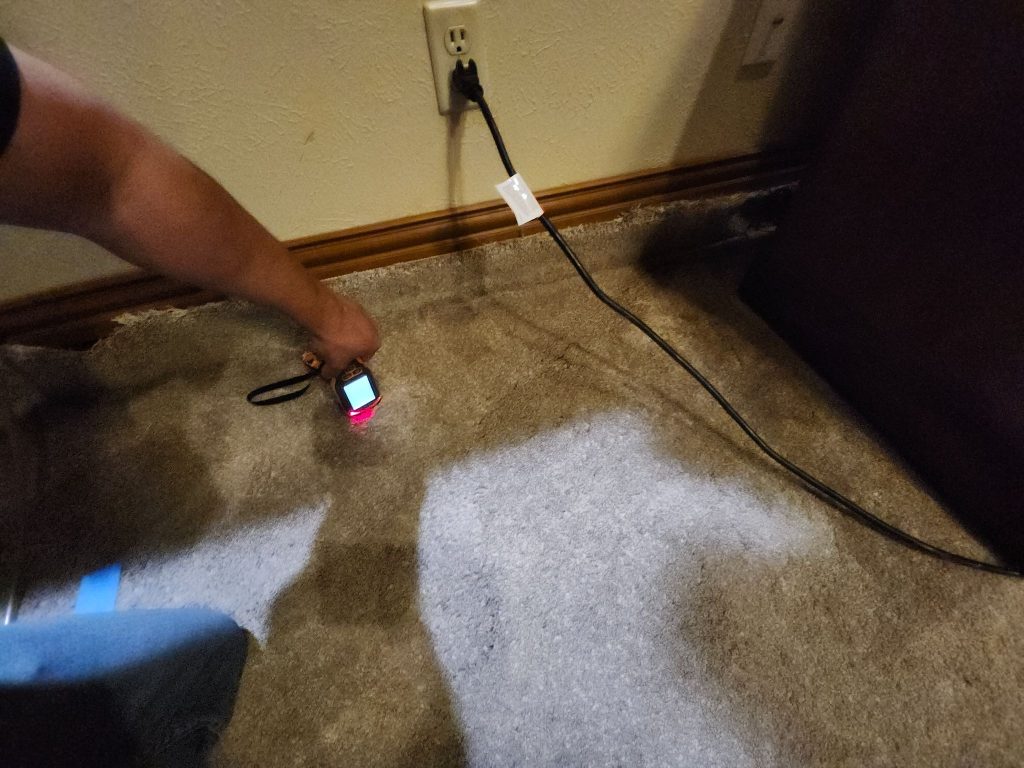
Extract the Subsurface Water Pooling
Traditional wet vacuums only remove surface puddles, leaving substantial amounts of water trapped within porous flooring. Professional teams use weighted extraction tools, often called subsurface extractors or “rovers,” which use the technician’s body weight to squeeze water out of thick carpet pads and underlying wood layers. This prevents the need to strip out every piece of flooring material by drawing moisture up from the very bottom.
Deploy Industrial Air Moving Units
Standard household fans simply circulate ambient humidity around a room without actually drying the building structure. Industrial axial air movers direct high-velocity streams of air at specific angles across damp walls and floorboards. This rapid airflow pulls moisture out of structural wood and releases it into the surrounding air so dehumidifiers can collect it.
What Construction Areas Face the Highest Failure Rates?
Baseboards and the bottom edges of drywall face the highest failure rates because water naturally pools at the lowest points of a room due to gravity. Drywall features a highly porous paper backing that wicks moisture upward, regular gypsum boards can pull water up to two feet above the actual standing puddle line.
Particleboard cabinetry found in kitchens and bathrooms also breaks down rapidly when exposed to leaks. This material uses compressed wood shavings held together with water-soluble glues. When moisture penetrates the outer laminate veneer, the interior glue dissolves, causing the wood panels to swell, crumble, and lose all structural strength. This requires a full replacement rather than simple drying techniques.
How Do Long-Term Leak Issues Damage Electrical Infrastructures?
When water travels through wall cavities, it frequently flows along electrical conduits, saturating junction boxes, light switches, and outlet panels. This liquid corrodes copper wiring, destroys delicate internal breaker components, and dissolves the protective plastic insulation shielding your electrical lines.
Even after a wall dries completely, the hidden mineral deposits left behind on electrical contacts can cause resistance heating, short circuits, and electrical fires. An inspection by a licensed technician ensures that your internal home wiring remains fully operational and safe to use.
Frequently Asked Questions
Can I Paint over a Water Stain on My Ceiling?
Do not paint over a fresh water stain until you fully address the original source of the leak and dry the structural framing completely. Slapping cosmetic paint over a wet ceiling traps moisture inside the drywall, rotting the wood joists above and encouraging hidden toxic mold growth.
How Long Does the Building Structure Take to Dry Completely?
A typical building structure takes between three to five days to dry completely when using industrial moisture extraction and dehumidification systems. Denser materials like thick timber, concrete subfloors, and plaster walls can require additional drying time depending on how long the water sat before extraction.
Should I Open My Windows to Help Speed up the Drying Process?
Opening your windows only helps if the outdoor air is significantly drier than the indoor climate. If it is humid outside, opening windows introduces extra moisture into your home, slowing down your equipment and prolonging the structural drying timeline.
Do I Need to Replace Drywall That Got Wet from a Pipe Burst?
You can save drywall if it was exposed to clean water, did not sag, and undergoes commercial drying within 24 hours. If the drywall remains saturated for days, warps, or absorbs contaminated water, you must cut it out and replace it to keep your home safe.
Fix Hidden Water Damage Today
If your property recently suffered a roof leak or pipe burst, professional intervention is required to stop secondary mold growth and structural decay. The expert team at Restore Aid & Recovery uses advanced industrial extraction, drying, and moisture detection equipment to handle residential and commercial water emergencies. Contact us today to schedule a thorough structural inspection and safeguard your home from long-term damage.