Water damage does not end when visible water is removed. Moisture often stays trapped inside walls, floors, and air pockets. If that moisture remains, mold can begin to grow within days and spread quietly across the property.
Here’s how dehumidification works after water damage, why it matters for mold prevention, and what property owners should know about the drying process.
How Mold Grows After Water Damage
Mold needs moisture, warmth, and organic material to grow. After water damage, all three conditions often exist inside a building. Drywall, wood, carpets, and insulation can hold moisture even when surfaces appear dry.
Mold spores are already present in indoor air. When moisture stays trapped, those spores settle and begin growing. This growth can start within 24 to 48 hours, making fast and proper drying critical after any water incident.
Explaining the Role of Dehumidification
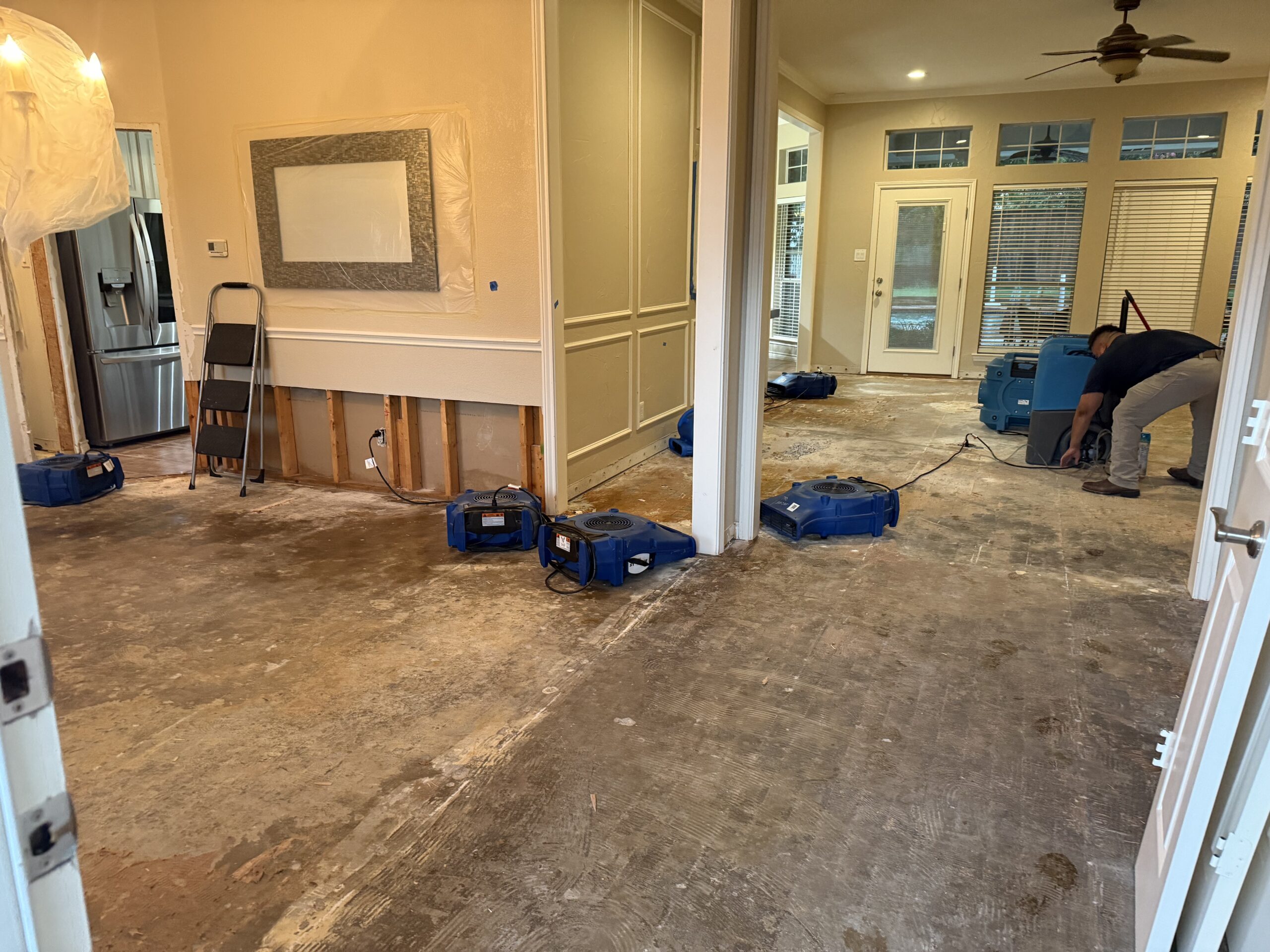
Dehumidification removes excess moisture from the air. Professional dehumidifiers pull humid air into the machine, remove the moisture, and release dry air back into the space. This process lowers indoor humidity levels and helps dry materials from the inside out.
Water extraction removes standing water, but it does not address moisture in the air. Without dehumidification, damp air continues to feed mold growth and slows the drying of building materials.
Preventing Mold Through Controlled Drying
Mold thrives in high humidity. Dehumidification keeps humidity levels low, which limits the conditions mold needs to grow. When the air stays dry, the moisture trapped in walls, floors, and furniture evaporates faster.
This controlled drying process reduces the time materials stay damp. Shorter drying time means fewer chances for mold colonies to form and spread across hidden areas of the property.
Drying Hidden Moisture in Building Materials
Water often moves into places that are not visible. It can seep behind baseboards, under flooring, and inside wall cavities. Fans alone may dry surfaces, but they cannot remove moisture locked inside materials.
Dehumidifiers work alongside air movement to pull moisture out of these hidden spaces. This balanced approach helps dry the structure evenly and reduces the risk of mold returning later.
Supporting Healthy Indoor Air Quality
Mold growth affects indoor air quality. As mold spreads, it releases spores that circulate through the air and may cause health issues for occupants. Dehumidification lowers moisture levels, which limits mold activity and supports cleaner indoor air.
Dry air also helps prevent musty odours, which often signal hidden moisture or early mold growth.
Using Professional Equipment for Better Results
Professional-grade dehumidifiers are stronger than household units. They can handle large volumes of moisture and maintain stable humidity levels during the drying process. Trained technicians monitor moisture readings and adjust equipment as needed.
This careful control helps complete the drying process fully, not just on the surface.
Reducing Long-Term Damage and Repair Costs
Mold removal can be costly and disruptive. Dehumidification lowers the risk of mold growth, which helps protect walls, flooring, and structural components. Proper drying also reduces the chance of repeated water-related issues.
By addressing moisture early, dehumidification plays a key role in protecting the property after water damage.
If your property has been affected by water damage, fast action makes the difference. Restore Aid Recovery provides professional dry-out and dehumidification services designed to stop moisture problems before they turn into costly repairs. Contact our team today to schedule an inspection and start the recovery process with experts who respond when it matters most.