
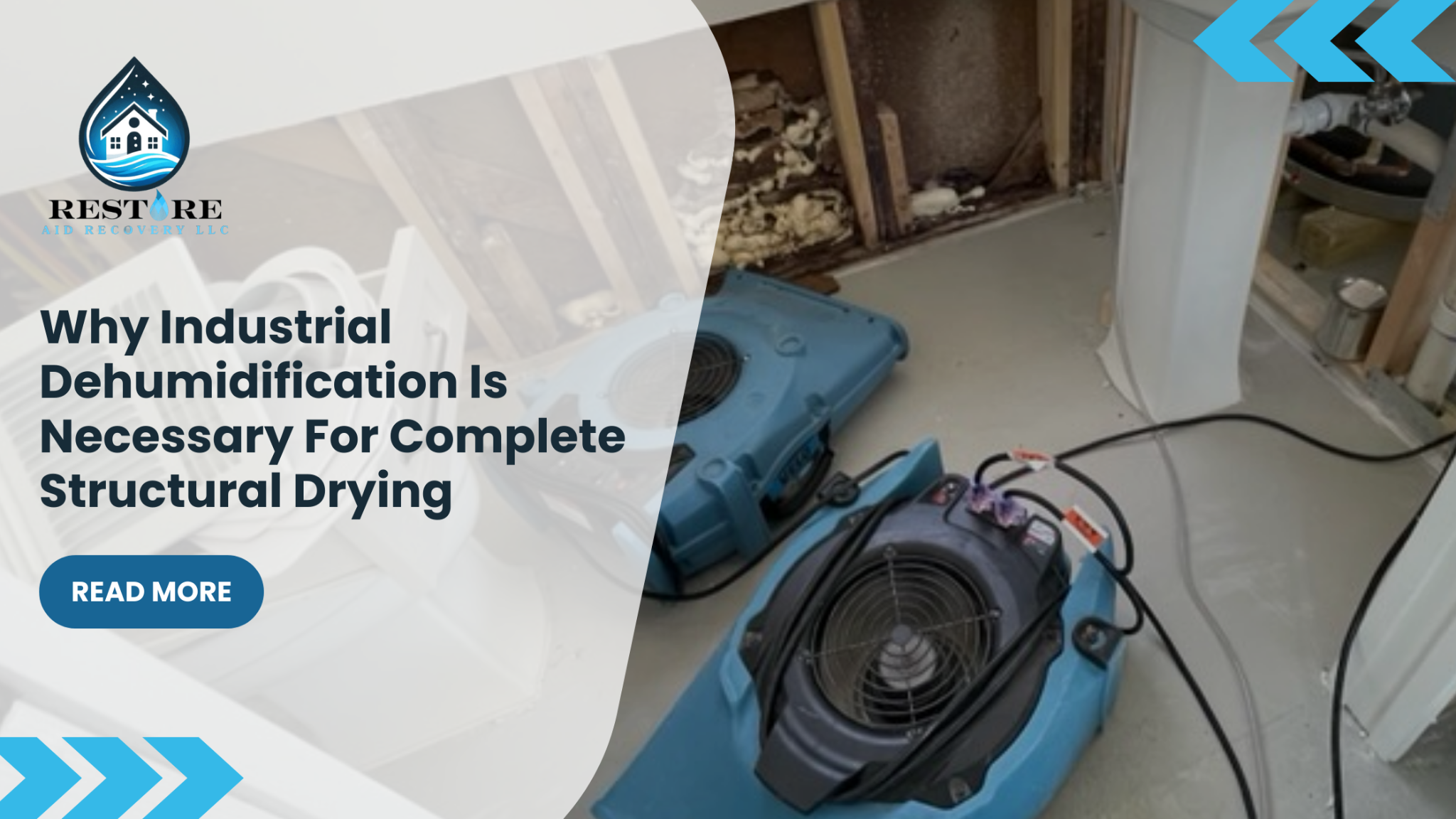
- Industrial dehumidification pulls out hidden moisture that sits deep inside walls, floors, and structural materials.
- These machines speed up drying, keep humidity stable, and stop problems like mold, odors, and structural damage.
- Professional teams, especially at Restore Aid Recovery, use advanced tools and controlled drying methods to bring buildings back to a safe, fully dry condition.
Water inside a building spreads fast and settles deep into materials long before anyone notices the full extent of the damage. Most people only think about removing standing water. Some try to open windows, run household fans, or use small retail dehumidifiers. While these can help reduce the damp feeling in the air, they cannot pull out moisture that has already settled inside drywall, wood framing, insulation, subfloors, or concrete.
This is where industrial dehumidification becomes a core part of any serious water damage restoration process. These machines create the conditions needed for trapped water to rise, release, and leave the structure.
The sections below walk through the science, the risks, the process, and the reasons professionals rely on these machines for complete recovery.
What Industrial Dehumidification Actually Does
Many people think dehumidifiers simply remove moisture from the air. This is only partly true. Industrial dehumidification changes the building’s environment to draw out moisture trapped inside materials. When humidity drops, water vapor inside walls and floors moves outward. The dehumidifier then captures that vapor and removes it from the air. This cycle repeats until the structure reaches a safe and stable moisture level.
Here is how this works in a real environment:
Creates a Constant Pull of Moisture
Building materials release water when the surrounding air has a lower humidity than they do. Industrial dehumidifiers keep humidity low enough to encourage steady evaporation. Household units cannot maintain this pull, especially in areas with significant saturation.
Speeds Up Evaporation
Evaporation slows down when the air is already heavy with moisture. By clearing moisture from the air at a rapid pace, industrial units help trapped water rise to the surface faster. The more water that escapes, the more room there is for deeper layers to dry.
Prevents Humidity Fluctuations
Moisture that escapes from materials can push indoor humidity up again. If this jump is not controlled, the drying process stalls. Industrial machines maintain steady control, keeping drying conditions stable at all times.
Supports Air Movers and Other Equipment
Air movers push evaporation forward by sweeping moisture off surfaces. Dehumidifiers then collect that moisture so it does not settle elsewhere in the structure. This teamwork drives the entire structural drying process.
A building becomes fully dry only when the moisture inside walls, floors, ceilings, and cavities reaches a safe level, not when the surface appears dry.
Types of Moisture That Remain After Water Removal
Standing water is only the first problem. Once it is removed, a building still holds several layers of moisture that cannot disappear on their own. These include:
- Surface Moisture: This is the thin layer of water left on materials after extraction. It dries quickly with proper airflow, but it is only the outermost portion.
- Absorbed Moisture: Porous materials like drywall, wood, insulation, and ceiling tiles absorb water like a sponge. This absorbed moisture is the most persistent and can sit deep inside the structure.
- Vapor Moisture: Even when materials look dry, moisture can remain in the air pockets between layers. This vapor can move unpredictably, often traveling into hidden spaces like wall cavities or subfloors.
Removing all three layers requires far more than fans or open ventilation. Industrial dehumidification targets these hidden pockets and forces them to release the moisture they have held onto.
How Industrial Dehumidifiers Enable Complete Structural Drying
To understand why these machines are so important, it helps to look at what they do during water damage restoration.
High Moisture Extraction Capacity
Industrial units can remove hundreds of pints of water per day. This level of removal is necessary when entire rooms or floors hold absorbed moisture. Retail dehumidifiers cannot match this pace or volume.
Precise Humidity Control
The drying environment must stay within a tight humidity range. Too high, and evaporation slows. Too low, and some materials may dry unevenly or too fast. Industrial systems hold steady conditions, even in large spaces or multi-level buildings.
Temperature Stabilization
Warm air holds more moisture. Cooling systems lower capacity. Dehumidifiers used in professional drying help maintain temperatures that keep evaporation steady and safe.
Prevents Moisture Movement Between Materials
If humidity rises in one part of the home, moisture can travel from wet to dry areas. This leads to new damage in places that were originally unaffected. Industrial equipment stops this movement by anchoring humidity at the right level throughout the structure.
The Risks of Skipping Industrial Dehumidification

Skipping or delaying proper dehumidification leads to long-term consequences that may not show up immediately. Some may take weeks. Others may take months. All of them can threaten a building’s safety and indoor comfort.
Mold Growth
Moisture is the fuel mold needs to grow. Even a slight increase in moisture levels inside walls or floors can allow spores to multiply. Mold spreads fast once conditions are right, and removing it later becomes costly and invasive.
Structural Weakening
When materials sit damp for too long, they lose their strength. Wood can swell or soften. Drywall becomes weak and crumbly. Flooring can separate. Moisture trapped inside framing can cause warping that affects doors, windows, and load-bearing areas.
Odors That Linger
Musty odors develop when moisture becomes trapped within materials. These odors become stronger over time and can return even after surface cleaning. Only a full drying process gets rid of them.
Staining and Discoloration
As materials dry on their own, minerals and contaminants can rise to the surface. This leads to staining that gets worse with time.
Repeat Repairs
If moisture remains inside the structure, repairs will not last. Paint can peel. Baseboards can distort. Floors can buckle again. Hidden moisture keeps pushing problems forward.
All these issues tie back to one root cause: incomplete drying. Industrial dehumidification aims to stop these problems before they begin.
Types of Industrial Dehumidifiers Used in Restoration
Different types of equipment are used depending on the space, material type, and level of saturation. The main types include:
- LGR (Low Grain Refrigerant) Dehumidifiers: These machines are common in residential and commercial jobs. They pull moisture from the air even when humidity levels drop, which keeps drying effective from start to finish.
- Desiccant Dehumidifiers: These units use a moisture-absorbing material instead of a refrigeration system. They work well in cold conditions or when drying thick materials like concrete, brick, or large commercial spaces.
- Large Portable Refrigerant Systems: For wide areas or connected rooms, these high-capacity units keep humidity low across the entire site.
The right machine depends on the job. This is why professional water damage restoration teams run tests before selecting equipment.
Where Industrial Dehumidification Is Most Necessary
Some spaces hold moisture longer than others. Many of these areas seem dry at first glance, but have layers of trapped water beneath the surface.
- Flooded Basements: Basements trap humidity because they sit below ground. Concrete walls and floors can hold moisture for weeks.
- Multi-Story Buildings: Water can travel behind walls or between floors. Only industrial systems can pull moisture out evenly throughout the structure.
- Commercial Buildings: Large interior spaces need consistent humidity control so moisture does not spread from wet zones to dry zones.
- Attics and Crawl Spaces: Both areas lack ventilation and often trap vapor. Insulation holds moisture for long periods.
- Residential Rooms with Porous Materials: Bedrooms, living rooms, and hallways often contain drywall, wood, carpets, and insulation that absorb water rapidly.
Any area affected by leaks, flooding, storms, appliance failures, or plumbing breaks can benefit from fast and controlled industrial drying.
How Restore Aid Recovery Handles Complete Structural Drying
At Restore Aid Recovery, we bring a full-service approach to water damage restoration, beginning the moment we arrive at the property.
- Fast Inspection and Moisture Detection: Our team starts by locating the source of water and mapping out all affected areas. This gives a clear picture of how far the moisture has traveled.
- Powerful Water Removal: Industrial extraction removes standing water quickly, so the building does not absorb more than it already has.
- Planning the Structural Drying Strategy: Each building reacts differently to water. We set drying goals, identify airflow patterns, and select the right mix of dehumidifiers and air movers.
- Running Industrial Dehumidification Equipment: These machines stay in place until moisture levels reach the safe range for the specific material. Our team monitors progress daily and moves equipment as needed.
- Documentation for Insurance: Measurements, photos, drying logs, and structural assessments help clients file claims with confidence.
- Final Verification: Before equipment is removed, we confirm that every area has reached proper moisture levels so the structure remains stable long-term.
With this process, our team at Restore Aid Recovery brings properties back to a safe and dry condition without leaving behind hidden problems.
Industrial dehumidification plays a major role in true structural drying, especially after major leaks, storms, or flooding. It supports the entire water damage restoration process by pulling moisture out of places that standard equipment cannot reach. Without it, the structure stays at risk of long-term damage, mold, odors, and repeated repairs.
If your property has experienced water damage, reach out to us at Restore Aid Recovery right away. Our team uses industry-grade drying methods that help protect your structure from long-term problems. Call us now for immediate support and a thorough restoration plan tailored to your situation.